
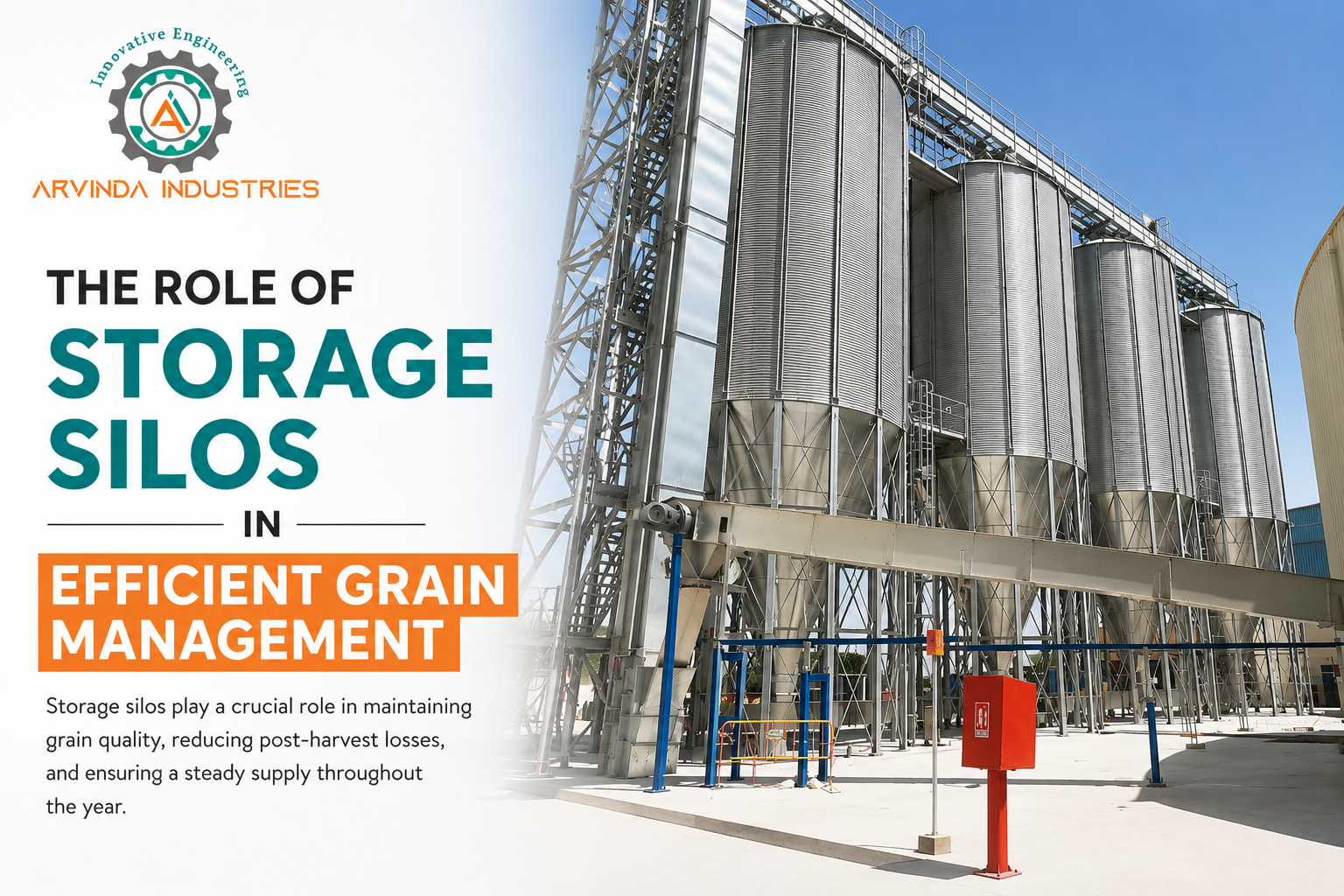
To reduce the significant losses in the financial sector, the modern agribusinesses are now turning to bulk storage automation over the old warehouse bagging system. It's hard to overlook the role of the industrial storage silo in this post-harvest revolution. These built structures are much more than just grain storage, they function as an advanced and controlled ecosystem that is engineered to maintain food quality, improve facility logistics, and optimise commercial returns.
Why Traditional Grain Storage Falls Short
Horizontal warehouses, flat sheds and jute bags were heavily used by the farmers and food processors for generations. These methods are simple to use on a small scale at a local level, but have serious drawbacks when applied to commercial or industrial quantities:
- Moisture Ingress: The conventional brick and concrete buildings do not effectively stop ambient moisture, resulting in the formation of mold, rotting of grains and toxic aflatoxin in the grain.
- Pest and Rodent Vulnerability: Bagged Grains are extremely vulnerable to insect, bird and rodent attacks, impacting product purity, imposing significant bio-security risks and reducing inventory quantities.
- Labor-Intensive Logistics: Manual loading, stacking and unloading of thousands of individual grain bags is very labor intensive and increases day to day operating costs, resulting in significant distribution delays.
Key Benefits of Industrial Storage Silos in Grain Management
Building a strong industrial silo system changes the way that bulk agriculture materials are treated. Let's dig into how storage silos are improving grain management in today's modern world:
1. Complete Environmental and Moisture Control
Grains are alive and will respire creating pockets of moisture and heat. If not controlled, this natural process can lead to "hot spots" and speed up the spoilage process. The advanced industrial storage silos are equipped with built-in ventilation system and automated aeration fans. These systems can automatically maintain internal temperature and moisture, continually adjusting to keep the external weather hazards neutralized, and stop any fungus growth altogether.
2. Space Optimization and Structural Integrity
Land is a valuable resource to any business. If grain storage is the objective, traditional flat storage sheds have a massive physical footprint to accommodate large amounts of grain. Silos are vertical, tall cylinders, so they require less land area and are able to store more. They are made of high-grade materials such as stainless steel or treated mild steel, and are designed to last for decades to handle heavy bulk loads and withstand harsh external conditions.
3. Mechanized Handling and Reduced Waste
There is absolutely no need to bag grain manually at slow speeds as with the old days with a bagging machine. Silos can be equipped with automated loading system components at the roof lid and discharge system elements like butterfly valves, knife edge gates or screw conveyors at the bottom cone allowing to load and retrieve bulk materials effortlessly and quickly. This smooth material flow reduces mechanical handling damage and drastically reduces the amount of grain spillage.
Selecting the Perfect Storage Silo for Your Operations
There are not pre-designed structures that are suitable for every grain management system. The design configuration depends on the size of the production and the specific discharge requirements which agribusinesses have to choose.
- Hopper-Bottom Silos: These silos have a cone or slope shape at the bottom, which relies on gravity to move materials down toward the center discharge opening. They work great for quick unloading, automated and for frequent grain turnarounds.
- Flat-Bottom Silos: Flat-bottom silos are preferred for ultra-high capacity and where grains are kept for long periods without being moved, typically using sweep augers to remove the product.
If you're looking at ensuring the durability of your crops, it's critical that you get your infrastructure from a reputable manufacturer. Major players such as Arvinda Industries create and produce industrial storage silos that fit the requirements of agriculture. Industrial containers provide complete protection from environmental factors and are perfectly compatible with current automatic conveyors and processing machinery.
Frequently Asked Questions (FAQs)
1. What is the core difference between flat-bottom and hopper-bottom silos?
Flat-bottom silos are horizontal silos with a flat bottom and are used for storing massive quantities of grain over long periods, usually necessitating the use of clean-out equipment such as sweep augers. Hopper bottom silos have a cone or sloped bottom that utilizes gravity to move the crop for automated and self-discharging use, and are ideal for processing facilities with frequent crop turnarounds.
2. How do storage silos protect grains from spoiling over long periods?
Silos inhibit the occurrence of grain spoilage by providing a very tight barrier to external pests, rodents and rain. They use sophisticated ventilation systems internally that regulate the temperature and moisture content of the product, thereby obviating the occurrence of localized hot spots, mold and insect infestations.
3. Can silos be customized for specific agricultural processing facilities?
Yes, industrial storage silos can be fully customized in terms of diameter, height, material (s/s or mild steel) and discharge options. The bottom cone angles and top lids are manufactured to the exact flow characteristics and capacity needed for the particular grain or seed being processed.
Conclusion
Grain management is critical for food security and agribusiness profitability around the world. Industrial storage silos are an essential defense against post-harvest losses, featuring the highest degree of environmental control, utilization of vertical space, automated bulk-handling systems, and more. Whether it's for short-term distribution or long-term grain storage, investing in storage solutions with an expert manufacturer such as Arvinda Industries guarantees a durable investment that optimizes your entire grain workflow from harvest to delivery.
